
We sat down with Paul Francis Jr., the Vice President of N’doo’owe Binesi, SJCG’s Indigenous Health Division, and Sage Laliberte, one of their Indigenous Health Associates in long-term care (LTC), to learn more about their work.
Paul is of Anishinawbe and European ancestry, with roots in Manitoulin Island. Paul is a member of Wikwemikong Unceded Territory, and was born and raised in Thunder Bay, Ontario. Using his extensive background in social work, education and mental health, Paul is a leader of SJCG’s strategy toward culturally safe health services.
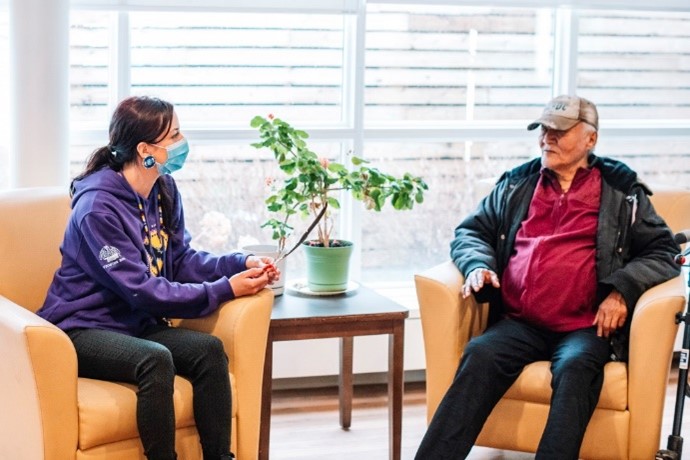
Alongside Paul, Sage is a member of Chippewas of Thames First Nation with Cree, Saulteaux and French ancestry. Through her expertise in geriatrics and child welfare, Sage enriches the team’s approach to Indigenous health within LTC. Together, with the N’doo’owe Binesi team, they drive SJCG’s commitment to supporting Indigenous culture and advancing reconciliation.
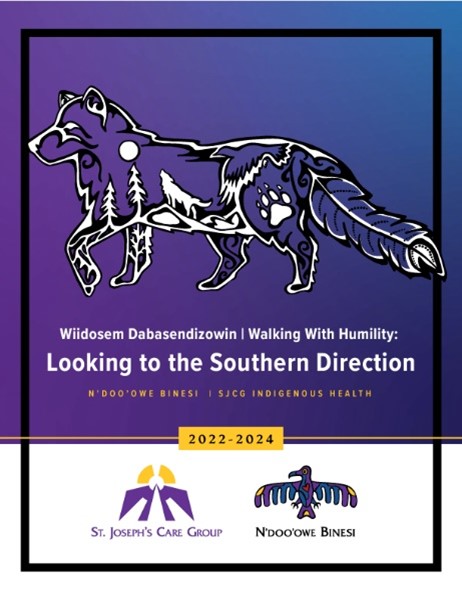
The “Wiidosem Dabasendizowin: Walking With Humility” 2018-2021 Plan and 2022-2024 Looking to the Southern Direction Plan outline SJCG’s journey toward integrating Indigenous healing practices while serving as milestones of progress and blueprints for future directions. Starting with the foundational steps in 2018, the plans not only document challenges but also outline strategic advances and evolving goals, highlighting SJCG’s commitment to continuous improvement and responsiveness to Indigenous health needs.
Their efforts are guided by the Ogichidaa Onaakonigewin, Elders Council, and with Paul’s position embedded in senior leadership, it ensures Indigenous perspectives are at all tables. Their Indigenous Health team has grown to 20 dedicated professionals in a relatively short span. The strategic development included expanding Nanaandawe’ewin, their Traditional Healing Program, to include a Traditional Healing Coordinator (later Manager), and receiving funding to hire additional Cultural Practitioners and Indigenous Health Associates. Their Indigenous Health Team also appointed key roles such as Clinical Manager, Indigenous Counselor, Transitions Coordinator, and Mental Health Worker, setting a standard for the structural support of Indigenous inclusion in healthcare.
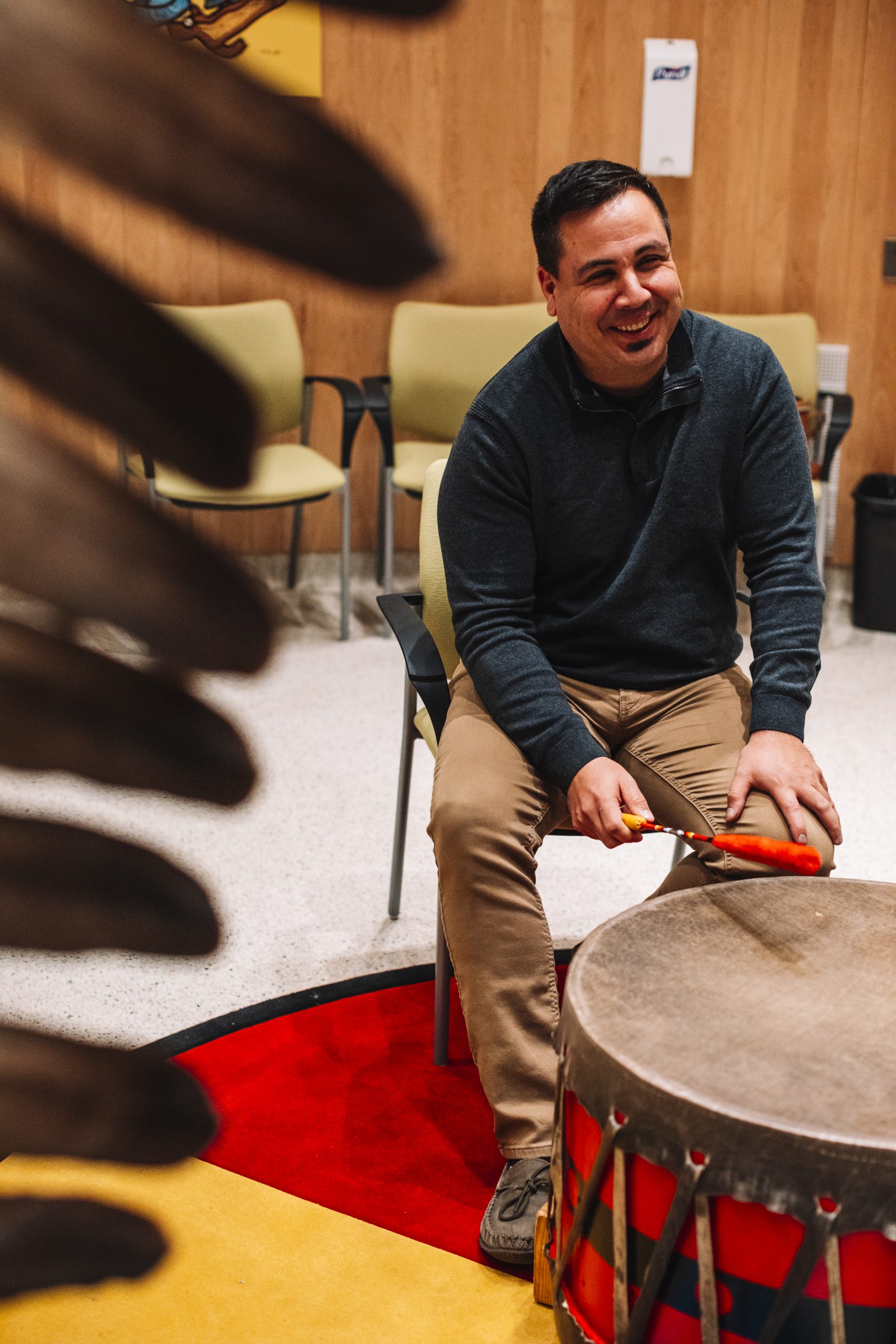
Significant strides have been made in policy and practice adjustments to support the Indigenous people living in SJCG’s LTC homes. Cultural practices like drum circles, traditional foods and ceremonies are integrated into daily life, providing opportunities for these customs and traditions to offer comfort and a sense of belonging. Understanding that is it important to have the right space for ceremony, SJCG has also created dedicated healing spaces for Indigenous peoples across their different sites, including the Misko Zhaawanong Shkwaadem (Red Southern Door) room at HRM in 2019, as well as healing medicine gardens on the grounds and a teepee. These actions not only enhance the care experience but also reinforce the organization’s commitment to cultural safety and respect.
Specifically, the adoption of and the facilitation of end-of-life ceremonies have deeply impacted clients and their families. For example, their smudging policy allows for flexibility in spaces where the practice can be performed throughout the LTC home, as it is recognized as an important aspect of healing. Such initiatives underscore SJCG’s dedication to honouring the cultural and spiritual needs of the Indigenous people who live there.
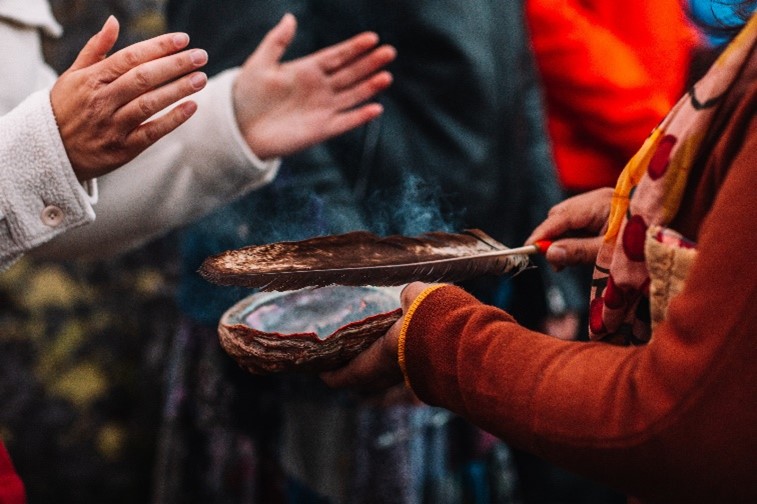
Smudging is the practice of creating sacred smoke from burning medicine, such as the four sacred medicines (sage, sweet grass, cedar, and tobacco being the most common). Smudging is used in almost all ceremonies for purifying or cleansing the spirit.
Reflections from residents, their families, and staff highlight the transformative impact of SJCG’s initiatives, sharing stories of connection, learning, and healing. Families express profound gratitude for these practices, such as end-of-life ceremonies, which provide solace and peace during these challenging times. These testimonials are a testament to the deep-seated value of culturally responsive care.
Paul powerfully encapsulates the essence of these efforts in his discussion with Santis Health on their podcast, stating:
“The journey towards reconciliation within healthcare is not just about integrating practices; it’s about recognizing our history, understanding our present, and actively shaping a future where Indigenous Peoples see their rights respected and their health prioritized.“
Listen to the full podcast to learn more about SJCG’s initiatives and the profound thoughts shared by Paul.
As SJCG continues to forge a path of reconciliation and cultural integration within its healthcare practices, it stands as a beacon of hope and a model for transformative care. Their journey illustrates that while each LTC home may be at a different stage in their path to reconciliation, there is much to be learned from sharing successes and challenges. SJCG’s commitment to integrating Indigenous knowledge and practices into their frameworks not only enhances the health outcomes of Indigenous communities but also enriches the cultural competence of their entire organization.
By openly discussing their journey and sharing their progress, SJCG invites other homes to reflect on their own practices, encouraging a collaborative environment where knowledge is shared, and diverse experiences are valued. This collective effort is vital for fostering environments where healing, respect, and dignity are at the forefront of care—not just for some, but for all who enter their doors.
As we look to the future, let us draw inspiration from SJCG’s example, recognizing that the journey of reconciliation is ongoing and richer when undertaken together. Through mutual respect, continuous learning, and unwavering commitment to equity, homes and other healthcare settings can serve as pillars of community well-being and catalysts for societal change.
To learn more about the SJCG’s Walking with Humility journey, please visit their website.
Written by Nabeel Chudasama, Project Coordinator at the Ontario CLRI at the Schlegel-UW Research Institute for Aging, and Michelle Fleming, Senior Knowledge Broker, at the Ontario CLRI at Bruyère
Stay Connected